Barb
البربري
Draft: needs vet review
- Type
- Horses
- Region
- North Africa
- Main use
- Riding
- Known for
- Tough, sure-footed
Quick facts
This information is general. For doses and treatment, always ask your vet.
About
Tough, sure-footed
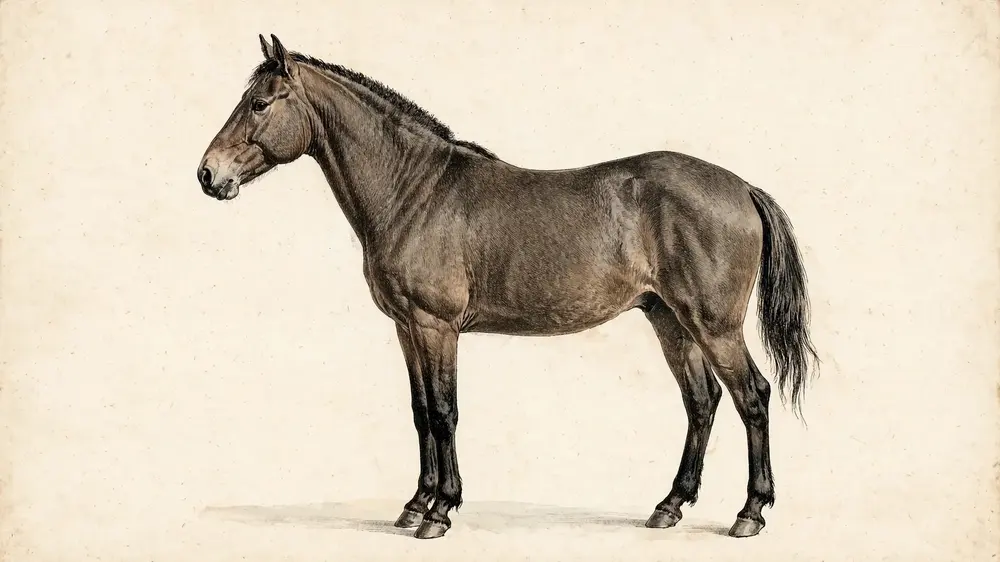
Real photos are coming, each with the photographer's name and license.
Benefits & uses
Riding
Food
Hay or berseem first, little and often. Grain only in hard work. Salt and clean water.
Common vaccines
Tetanus, equine influenza, rabies where present.
Draft: needs vet review
Water and general notes: Water 25-50 liters, and salt about 50 g.
Feeding by stage and goal
| Stage | Weight / goal (kg) | Intake (% of weight) | Ration protein (%) | Energy TDN (%) | Daily ration example |
|---|---|---|---|---|---|
| Foal (0-6 months) | 45-250 | 16-18 | Colostrum first 2-3 hours, mother's milk, and from two months old, a starter of 0.5 kg for each month of age | ||
| Weanling (6-12 months) | 200-300 | 2.5-3 | 14-15 | Good quality hay ad lib + 2-3 kg concentrate | |
| One to two years old | 300-400 | 2-2.5 | 12-13 | Hay + 2 kg concentrate | |
| Horse at rest | 400-500 | 1.5-2 | 8-10 | 7-9 kg hay, no need for grains | |
| Light work | 400-500 | 2 | 10 | Hay + 1-2 kg concentrate | |
| Hard work or racing | 400-500 | 2.5 | 11-12 | Hay + 3-5 kg concentrate over 3 meals, and the meal should not exceed 2 kg of grains | |
| Pregnant mare: last 3 months | 400-500 | 2 | 11-12 | Hay + 1.5-3 kg concentrate | |
| Lactating mare (first 3 months) | 400-500 | 2.5-3 | 13-14 | Hay ad lib + 3-5 kg concentrate | |
| Stallion in breeding season | 450-550 | 2 | 10-11 | Hay + 2-3 kg concentrate |
Concentrate mixtures (parts per 100 kg)
| Mixture | Barley | Yellow corn | Bran | Soybean meal 44% | Molasses | Limestone | Salt | Minerals | Approx. protein |
|---|---|---|---|---|---|---|---|---|---|
| Foal starter | 20 | 40 | 15 | 20 | 2 | 1.5 | 0.5 | 1 | 17% |
| Working horses and mares | 40 | 25 | 20 | 10 | 2 | 1.5 | 0.5 | 1 | 14% |
Roughage should not be less than 1.5% of the horse's body weight per day. Sudden changes in feed are a major cause of colic and laminitis.
Vaccine and care calendar, from birth to sale
| Age / timing | Action |
|---|---|
| Day of birth | Colostrum within 2-3 hours, disinfect navel, ensure first meconium passes |
| Two months | First deworming, then every 2-3 months until one year old |
| 4-6 months | Tetanus, two doses 4-6 weeks apart |
| 6 months | Equine influenza: one dose, a second after 4-6 weeks, and a third after 6 months |
| As per region | Rabies, strangles, and herpes where recommended |
| Every year | Tetanus and influenza every 6-12 months depending on activity |
| Pregnant mare | Herpes at months 1, 7, 9 of pregnancy, and a tetanus and influenza booster 4-6 weeks before foaling |
| Every 6-8 weeks | Hoof trimming or shoeing |
| Every year | Dental check and floating if necessary, deworming adults based on fecal test |
Common diseases
| Disease | Signs | What to do | Prevention |
|---|---|---|---|
| Colic | Kicks at belly, rolls, looks at flank, not passing manure | Emergency: vet immediately, do not give food | Change feed gradually, water always available, parasite control |
| Laminitis | Lameness in front legs, hot hoof, shifts weight back | Emergency: vet immediately | Don't increase grains suddenly, prevent obesity |
| Tetanus | Body stiffness, third eyelid covers the eye, difficulty chewing | Vet immediately | Vaccination, cleaning wounds |
| Equine Influenza | Fever, dry cough, nasal discharge | Complete rest and vet | Vaccination, isolate new arrivals |
| Strangles | Fever, swelling of glands under the jaw, pus from the nose | Isolate and vet | Isolate new arrivals, separate equipment |
| Worms | Weight loss, dull coat, recurrent colic | Vet | Deworming based on fecal test, stable hygiene |
Related breeds
Track your Barb herd with Qatee3
Join the waitlistThis information is general. For doses and treatment, always ask your vet.