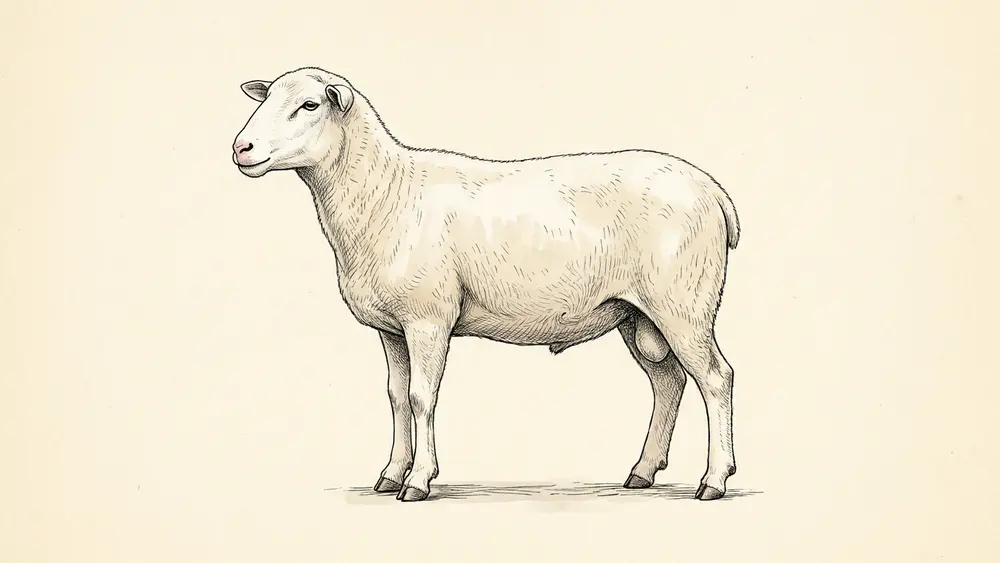
Australian White
أسترالي أبيض
- Type
- Sheep
- Region
- Australia; now bred in the UAE
- Main use
- Meat
- Known for
- Hair sheep, no shearing needed
Quick facts
This information is general. For doses and treatment, always ask your vet.
About
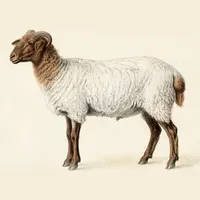
Hair sheep, no shearing needed
Real photos are coming, each with the photographer's name and license.
Benefits & uses
Meat
Food
Roughage base (hay, straw, berseem) plus concentrate for fattening and late pregnancy. Clean water, sheep mineral lick with no added copper.
Common vaccines
FMD, PPR, sheep pox, clostridial (enterotoxemia), brucellosis, Rift Valley fever where advised.
Water and general notes: Water: 4-8 liters per day, and more in heat and lactation. Sheep are sensitive to copper: do not use goat or cattle mineral salts.
Feeding by stage and goal
| Stage | Weight / goal (kg) | Intake (% of weight) | Ration protein (%) | Energy TDN (%) | Daily ration example |
|---|---|---|---|---|---|
| Nursing lamb (0-2 months) | 3-15 | 18-20 | 75-78 | Colostrum first 6 hours, mother's milk, and from the second week starter feed and good hay ad libitum. | |
| Weaning (2-4 months) | 15-25 | 4-4.5 | 16-18 | 72-75 | 0.5-0.8 kg concentrate + hay or berseem. |
| Fattening | 25-45 | 3.5-4 | 14-16 | 70-75 | 1-1.3 kg concentrate + 0.3-0.5 kg straw or hay. Expected gain 150-300 g/day depending on breed. |
| Dry ewe (maintenance) | 50 | 2-2.5 | 9-10 | 55 | Straw or hay + 0.2-0.3 kg concentrate, or 4-5 kg green berseem. |
| Flushing (3 weeks before) | 50 | 2.5-3 | 10-12 | 60 | Maintenance ration + 0.25-0.5 kg extra concentrate (increases twinning rate). |
| Gestation: first 3 months | 50 | 2-2.5 | 9-10 | 55 | Same as maintenance. |
| Gestation: last 6 weeks | 50-60 | 2.5-3 | 11-13 | 60-65 | 0.4-0.7 kg concentrate + good hay (ewes with twins get the higher amount). |
| Lactation (first 6-8 weeks) | 50 | 3-4 | 13-15 | 65 | 0.8-1.2 kg concentrate + berseem or hay. |
| Breeding ram | 70-100 | 2.5-3 | 10-12 | 60 | Hay + 0.5-1 kg concentrate in breeding season. |
Concentrate mixtures (parts per 100 kg)
| Mixture | Yellow corn | Barley | Bran | Soybean meal 44 | Limestone | Salt | Minerals & Vitamins | Approx. protein |
|---|---|---|---|---|---|---|---|---|
| Lamb starter | 50 | 0 | 25 | 20 | 2 | 1 | 1 + 1 مولاس | 18% |
| Fattening | 55 | — | 25٫5 | 15 | 3 | 1 | 1 + 0٫5 كلوريد أمونيوم | 15% |
| Pregnant and lactating ewes | 20 | 40 | 25 | 12 | 1٫5 | 1 | 1 | 15% |
Ammonium chloride in the fattening mixture reduces urinary calculi in males. Part of the soybean can be replaced with cottonseed or sunflower meal if cheaper, increasing the amount because their protein is lower.
Vaccine and care calendar, from birth to sale
| Age / timing | Action |
|---|---|
| Day of birth | Colostrum within 6 hours, disinfect umbilical cord with iodine, tag the newborn. |
| 1 week | Vitamin E and Selenium in deficient areas, as per veterinarian. |
| 6-8 weeks | Clostridials (enterotoxemia) first dose. |
| 3 weeks later | Clostridials booster dose. |
| 3 months | Foot and Mouth Disease (and a booster after a month), Sheep Pox, first deworming. |
| 3-4 months | Peste des Petits Ruminants (PPR) (immunity approx. 3 years), and Rift Valley Fever where recommended. |
| 3-6 months (breeding females) | Brucella as part of the governmental veterinary program. |
| Every 6 months | Foot and Mouth Disease. |
| Annually | Clostridials, Sheep Pox. |
| Every 3-4 months | Deworming based on fecal test, spraying for ticks and mange after shearing. |
| Before breeding | Deworming, check body condition and hooves. |
| 4-6 weeks before birth | Clostridial booster dose for the ewe so colostrum protects the lambs. |
| Before sale or slaughter | Ensure withdrawal period for the last medication has passed. |
Common diseases
| Disease | Signs | What to do | Prevention |
|---|---|---|---|
| Enterotoxemia | Sudden death or convulsions, especially in fast-growing lambs. | Veterinarian immediately, and vaccinate the rest of the flock. | Clostridial vaccination, gradual feed changes. |
| Foot and Mouth Disease | Fever, salivation, sores in the mouth and on hooves, lameness. | Isolate, veterinarian, and report to veterinary authorities. | Vaccinate every 6 months, isolate new animals for 21 days. |
| Peste des Petits Ruminants (PPR) | Fever, nasal and ocular discharge, mouth sores, diarrhea, cough. | Isolate and veterinarian immediately, it's a notifiable disease. | Vaccination. |
| Sheep Pox | Fever and pustules on wool-free skin. | Isolate and veterinarian. | Annual vaccination. |
| Pneumonia | Cough, panting, fever, associated with cold and poor ventilation. | Veterinarian to determine the antibiotic. | Ventilation without drafts. |
| Internal Parasites | Weakness, pale eyelid, diarrhea, swelling under the jaw (bottle jaw). | Veterinarian chooses drug after fecal examination. | Regular deworming, pasture rotation. |
| Urinary Calculi | Fattening male in pain and dribbling urine. | Emergency: veterinarian immediately. | Calcium:Phosphorus 2:1, ammonium chloride, plenty of water. |
| Bloat | Distension of the left flank, shortness of breath after wet clover or a lot of grain. | Veterinarian immediately. | Do not offer wet clover, introduce grain gradually. |
| Pregnancy Toxemia | Ewe in late pregnancy (usually with twins) is lethargic, off-feed, and trembling. | Veterinarian immediately. | Adequate nutrition in the last 6 weeks. |
| Mastitis | Hot and swollen udder, abnormal milk. | Veterinarian. | Clean bedding. |
Related breeds
Track your Australian White herd with Qatee3
Join the waitlistThis information is general. For doses and treatment, always ask your vet.